
Search Blount County Traffic Court Records
Blount County Traffic Court Records help drivers find citations, hearing notes, and final outcomes without guessing which office still has the file. The Circuit Court Clerk, the General Sessions Court, and the statewide Tennessee court portal all matter here. Some traffic matters are current and easy to spot. Others are older and need a careful request. If you know the name, case number, or date range, the search gets much tighter. That is the fastest way to move from a rough ticket memory to the county office that can actually pull the record.
Where Blount County Traffic Court Records Live
The Blount County Circuit Court Clerk is the main office for county traffic records. That office keeps records for Circuit Court, General Sessions Court, and Clerk and Master matters. It handles traffic citations, court dates, disposition notes, and requests for certified copies. If the case was heard in the county court system, the clerk office is the place most likely to have the paper trail. It is also the office that can tell you whether a file is open, closed, or stored in a way that needs a more exact request. The office is in Maryville, so the county seat is the natural starting point for an in-person search.
General Sessions Court matters too. That court handles traffic violations, misdemeanors, and civil cases under $25,000. Traffic citations from the Blount County Sheriff's Office, the Tennessee Highway Patrol, and municipal police departments can all end up in that docket. A roadside stop is only the start of the record trail. The docket and hearing notes show how the court treated the charge. If a driver paid, reset, or contested the citation, that choice may be noted there first, long before any later state record update is made.
The County Clerk can also help direct the search. If the question starts with a vehicle issue, a title question, or a general records question, that office can point you toward the right county desk. That matters because Blount County uses more than one office for related traffic work. A short direction from the County Clerk can keep you from sending the wrong request to the wrong place. In a county with several office paths, that kind of help is worth a lot.
The county records image below points to the Blount County online court records search page, which is the best county starting point for a quick first look.
This Blount County online court records search page is the fastest county tool for a first traffic record check.
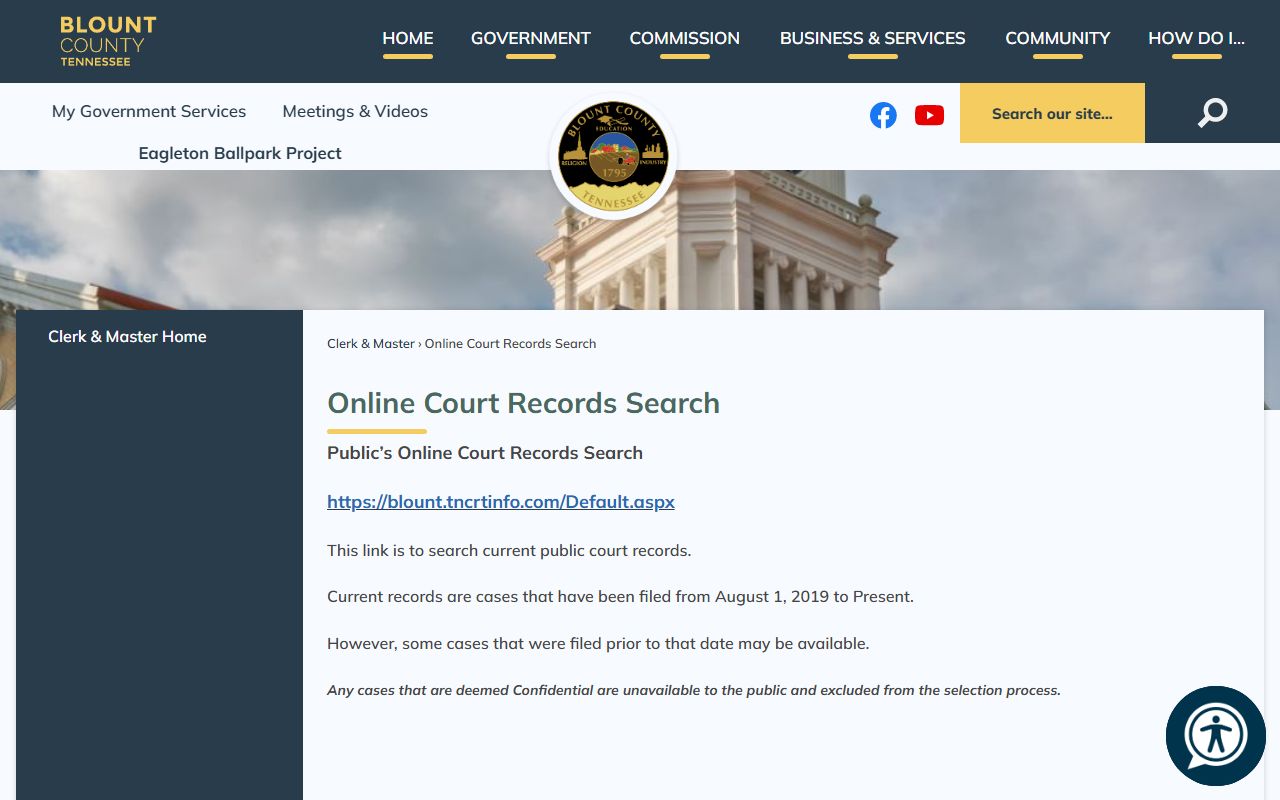
That online portal is useful before you call the clerk or ask for a certified copy.
Blount County Traffic Records Search
Online search is the quickest first check for many Blount County traffic cases. The statewide Tennessee Public Court Records portal at blount.tncrtinfo.com covers current public court records from August 1, 2019 to the present. Some earlier cases may also be available. Confidential cases are excluded from public search. The database lets you search by name, case number, or date range, which makes it a good first pass when you want to confirm that a case exists before you call the courthouse or request copies. It is especially useful when you only know part of the citation details.
If the portal shows the case, the next step is usually a direct request to the Circuit Court Clerk. That office can tell you whether the record is a plain copy, a certified copy, or a docket entry. If the portal does not show what you need, that does not mean the case is missing. It may simply mean the file is older, stored differently, or waiting in a court division that is not part of the shared online set. The county office can still finish the search. A short, exact request often works better than a broad one.
Good request details include the following:
- Full name of the driver or party
- Citation or case number, if available
- Approximate ticket date or hearing date
- General Sessions or Circuit Court division
- Any old notice, receipt, or court date you already have
For older files, the Tennessee State Library and Archives can help when a local office no longer has the active file on hand. TSLA is most useful when the record was moved out of daily use or when the county office points you to historical research. That makes it a solid backup for traffic records that are no longer easy to pull from the clerk's desk. The archive is not a substitute for the county file, but it can help you keep the search alive when the online window no longer shows the case.
Tennessee citation rules still shape the paper trail. Under Title 55 of the Tennessee Code, a citation must identify the person cited, the officer, the offense, and the court appearance details. That is why a record search works best when the name, date, and court all match. A loose memory of the ticket is not enough when you need the exact file, but the court record will usually pull the pieces together.
Blount County Traffic Records and Public Requests
Blount County has a detailed public records policy for the Circuit Court Clerk's Office. Inspection requests may be made orally or in writing on Form A. Requests for copies must be made in writing on Form A. That difference matters because many people think every request must be a paper request. In Blount County, inspection alone can be handled more flexibly, but a copy request still needs the written form. The policy also requires proof of Tennessee citizenship before inspection or copies are released.
The clerk office reviews requests to make sure the file description is specific enough, that any needed redaction is considered, and that the county is the right custodian. That is normal. It is not a roadblock. It is the office doing the work needed to match the request to the file. If you bring a case number, a date range, or a name that matches the citation, the process is much smoother. If you need a copy for another office or a later proceeding, ask for that up front so the staff knows whether a certified copy is needed.
The clerk office at 926 East Lamar Alexander Parkway in Maryville is the office named in the county policy. That address matters because the policy ties the public records process to a real desk, not an abstract county page. If you are unsure whether the request should go to the circuit clerk or another office, start with the clerk. The clerk can either process the request or point you to the right county contact. That is often the fastest way to keep the search moving.
For a public records issue, the county policy and Tennessee court access rules can also help explain the TPRA process. That is useful when you are trying to frame a request, figure out why a copy might be redacted, or decide how much detail to include. In a county with a formal policy, the safest move is to match the form the office expects and keep the facts narrow.
Get Blount County Traffic Records
The best way to get Blount County traffic records is to keep the request short and specific. Say who the case is for, what date range you need, and which court handled it. If you have the case number, include it. If you need a certified copy, ask for that up front. The Circuit Court Clerk is the most direct office for county records, while the County Clerk can help direct you when the search starts with a vehicle question or a general records question. That keeps the search moving in the right direction from the start. It also helps the clerk know whether you need a search result or an actual file copy.
If you are checking the case from home, start with the statewide portal and then move to the county office if needed. The portal is good for speed, but the clerk office is still the place that can give you the actual county file. If you need help with a public records issue, the county policy and Tennessee court access rules can help explain how county offices handle requests. That is useful when a request needs more detail or when you want to understand the difference between inspection and copies. The public records side of the process matters as much as the court side.
For older material, TSLA is the best backup. For driver history questions, the Tennessee Department of Safety and Homeland Security page at tn.gov/safety explains how traffic convictions connect to the state driver system. That is separate from the court file, but it can matter after the case is closed. A clean search often checks both the county record and the state driver side so the result makes sense in context.
Blount County's portal, clerk office, county clerk, and state support tools all work together. Start with the portal if you want speed. Go to the clerk if you need the file. Use the county clerk if you need direction. That path usually gets the cleanest result.
What Blount County Traffic Court Records Show
Blount County traffic records usually show the basics first. You can expect the defendant name, citation number, court date, charge, and case status. A fuller record may also show the hearing note, a plea, a continuance, a payment note, or the final disposition. If the case moved from General Sessions Court to Circuit Court, the county file may show that path too. That is why county records are useful even when you already know the ticket was paid or dismissed. The file often shows how the court got there, not just where it ended.
Some files are short. Others include older docket entries or scanned paper. The online portal can help confirm whether the case is in the current records set, but the clerk office is still the place that can give you the copy you need. A plain copy is fine for some uses. A certified copy is better when you need to show the record in another office or in a later proceeding. Ask for the version that matches your need so you do not end up with the wrong paper. That saves time for both you and the staff.
Blount County traffic files can also include case notes tied to the officer, the court division, or the hearing date. That makes it easier to match a citation to the actual court result. If a record request is too broad, the office may not know which file you want. If the request is tight, the office can usually find the right record much faster. The more exact the request, the cleaner the result.
When the record is part of a larger driver history question, the county file and the state record need to be read together. The county file shows the hearing path and result. The state side shows how a conviction can affect the driver record. That is the practical reason to check both.